

Visit Visa for Indians: Documents, Process & Expert Tips
Planning an overseas holiday or visiting family should feel exciting—not like a paperwork puzzle. Many Indian travellers have the same questions: Which documents do I need? How much money should I show? Will an invitation letter help? What if my application is refused?
The answer depends on the destination and your circumstances. Your travel purpose, finances and documents should tell one clear, consistent story. This guide explains what to prepare and what to check before applying.
Table of Contents
What Does a Short-Stay Visitor Visa Allow, and Who Needs One?
A short-stay visitor visa allows eligible travellers to enter a country temporarily for an approved reason, such as tourism, visiting relatives, attending certain events or receiving permitted medical treatment.
If you hold an Indian passport, check your destination’s entry rules before booking. The correct category depends on what you plan to do. Visitor permission generally does not allow ordinary employment or long-term residence, so check its conditions before travelling.
Official guidance: UK Standard Visitor and US visitor visas.
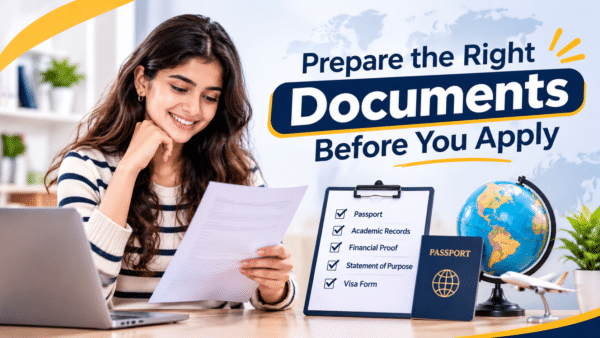
Visit Visa Documents: Which Documents Should Indian Travellers Prepare?
Start with the destination’s official checklist. The final list depends on the country, your travel purpose and your circumstances.
Passport and personal details
Prepare a valid passport, application form and photographs in the required format. Previous passports or travel records may also be relevant. Check passport validity and ensure names and dates match.
Financial and employment evidence
Show how you will pay for the trip. Depending on your situation, this may include:
- Recent bank statements showing the source of funds.
- Salary slips and an employer letter.
- Business, tax or income records if self-employed.
- Student enrolment or approved leave evidence.
- Pension or other income records, where relevant.
There is no universal bank balance that guarantees approval. Funds should be genuine, accessible and reasonable for the trip.
Travel purpose, accommodation and sponsorship
Explain your destination, length of stay and accommodation. Evidence may include an itinerary, accommodation details, event confirmation or host invitation.
If someone else is paying, explain your relationship and provide sponsor details and financial evidence where required. An invitation letter alone does not guarantee approval.
For the UK, read the official supporting-document guide. Documents not in English or Welsh require a full translation.
How Do You Apply for a Visitor Visa from India?
The route differs by country, but most applications follow these stages.
Visit Visa Process: 6 Steps from Form to Decision
- Choose the correct category for your actual travel purpose.
- Check official requirements for eligibility, documents, fees and appointments.
- Complete the form accurately and match answers to your evidence.
- Pay and book, using the official system where required.
- Submit documents and biometrics at the designated centre, if required.
- Attend an interview or await a decision. Answer honestly and track official updates.
For US tourism applications, applicants generally complete the DS-160 form. Follow the relevant Embassy or Consulate’s interview instructions.

What Should You Know About Visiting the UK, USA and Schengen Countries?
The same paperwork does not work for every destination. Check these differences before applying.
United Kingdom
The Standard Visitor route covers tourism, family visits and other permitted activities. You must show that your visit is allowed, you will leave at the end and can cover its costs. See UK visitor guidance.
United States
For tourism or family visits, Indian travellers generally use the B-2 or combined B1/B2 category. Applicants complete the DS-160 and follow local Embassy or Consulate instructions, which may include an interview. An invitation does not replace the eligibility assessment. See US visitor guidance.
Schengen countries
A short-stay Schengen visa generally allows up to 90 days in any 180-day period. Apply through the country where you will spend the longest time; if stays are equal, apply through the first country you visit. Travel medical insurance is required. See the European Commission’s guidance.
| Destination | Main point to check |
| UK | Visitor purpose, funds and intention to leave |
| USA | B-2/B1-B2 category, DS-160 and interview |
| Schengen | Main destination, insurance and 90/180-day limit |
How Much Money Should Indian Applicants Show for a Short Trip?
There is no single minimum bank balance for every country. The amount depends on trip length, accommodation, transport, daily expenses, sponsorship and your finances.
For example, if a 10-day trip is expected to cost ₹1.4 lakh, your evidence should make that budget credible in light of your income and savings. This is an illustration, not an official threshold.
If a sponsor is paying, explain the arrangement and provide the required evidence. Avoid unexplained deposits just before applying. A clear source of funds is more useful than a high balance you cannot explain.
How Long Can the Decision Take?
Processing time and appointment availability are different. Check both close to your application date.
- UK: Usually within three weeks after identity checks and document submission.
- Schengen: Normally 15 days; may extend to 45 days if further checks or documents are needed.
- USA: Interview waits vary by consulate and are updated monthly.
These are general timelines, not guarantees. Avoid non-refundable bookings before a decision. Check UK processing times, Schengen processing rules and US interview wait times.
Why Are Visitor Applications Refused, and How Can You Avoid Common Mistakes?
A refusal is frustrating, especially when you have planned your trip. Often, the issue is not the number of documents submitted, but whether they show that you meet the destination’s rules.
Common problems include:
- Unclear travel purpose: Your reason does not match the selected category or is poorly explained.
- Unexplained finances: Funds are not clearly accessible or deposits have no clear source.
- Conflicting details: Dates, employment information or travel plans differ across documents.
- Missing evidence: A requested document or explanation is absent.
- Eligibility concerns: The decision-maker is not satisfied that you meet the visitor requirements.
Before submitting, check that your answers are accurate, your trip is realistic and all requested documents are included. Disclose previous refusals when asked. No consultant can promise approval.
How V2D Overseas can help you prepare
Unsure which documents apply or what to check before submitting? V2D Overseas in Visakhapatnam offers travel visa assistance. The team can help you understand destination requirements, organize application information and identify points that need clarification.
The immigration authority makes the final decision. Our aim is to help you prepare with a clearer plan, not promise an outcome.
Planning a trip abroad? Get your application questions answered before you submit.
Discuss your destination and the guidance you need with V2D Overseas.
Explore V2D Travel Visa Assistance · Contact V2D Overseas
Conclusion
Do not let avoidable confusion delay your plans. Check your destination’s rules, prepare genuine documents and keep your travel purpose, finances and application details consistent.
There is no fixed bank balance, universal checklist or guaranteed approval formula. A well-prepared application supports your circumstances with clear evidence. When you need guidance, V2D Overseas can help you understand the next steps.
Frequently Asked Questions
1. Is there a minimum bank balance for Indian applicants?
No single amount applies to every country. Required funds depend on the trip, costs, sponsorship and your circumstances. Follow the destination’s official financial-evidence rules.
2. Can self-employed people apply?
Yes. They can provide business, tax, income and bank records that explain their work and financial position.
3. Does an invitation letter guarantee approval?
No. It can explain the visit or accommodation, but the authority assesses the complete application.
4. Can I apply again after a refusal?
Often, yes. Review the refusal reasons, address the concerns where possible and check the destination’s reapplication or appeal procedure.
5. Can I work while visiting?
Ordinary employment is generally not permitted under visitor categories. Check the specific visa conditions because permitted activities differ by country.